



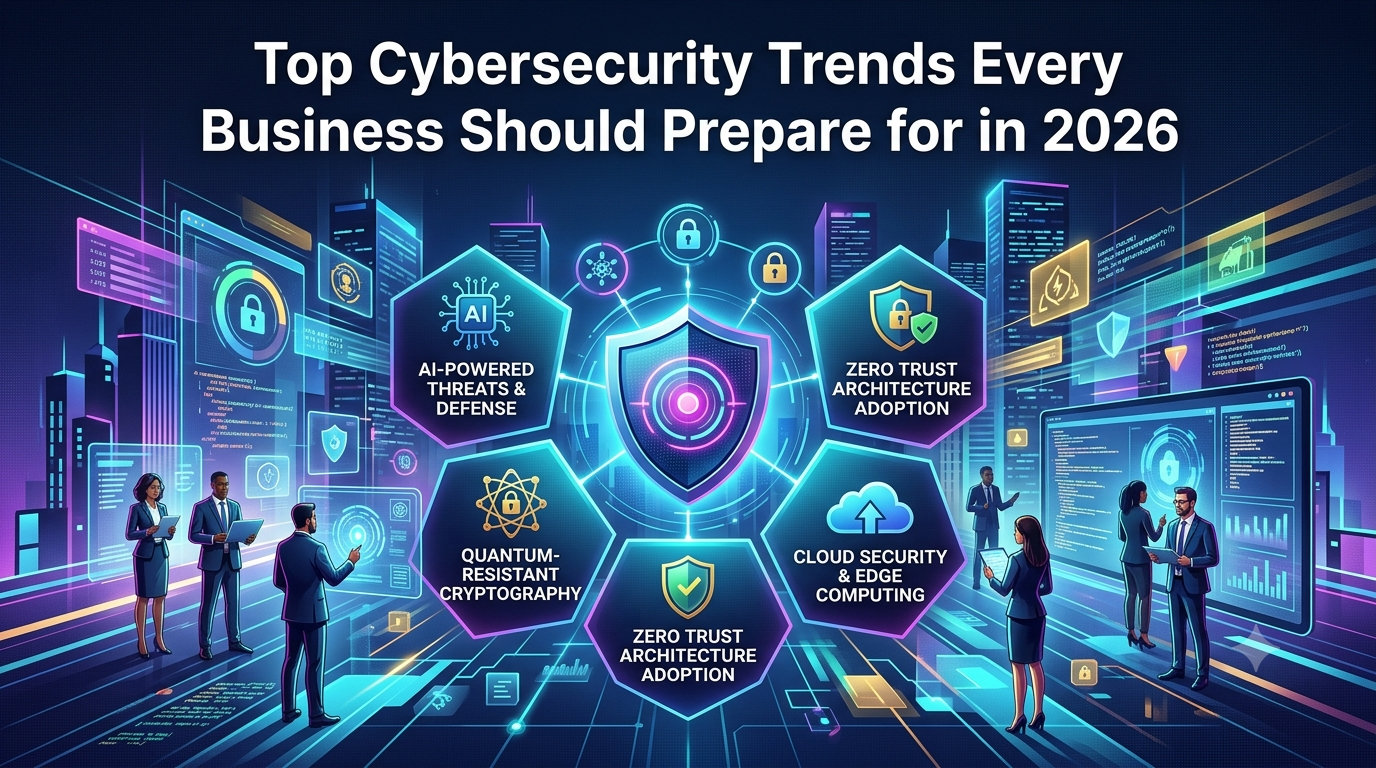
Cybercrime is no longer a problem that only affects large corporations or government agencies. Today, businesses of every size—from local startups to multinational enterprises—face increasingly sophisticated cyber threats. As organizations continue to embrace cloud computing, artificial intelligence (AI), remote work, and connected devices, the digital landscape becomes more productive but also more vulnerable.
According to recent industry reports, cybercrime is expected to cost businesses trillions of dollars annually over the coming years. From ransomware attacks that shut down operations to data breaches that expose sensitive customer information, the financial and reputational consequences of poor cybersecurity can be devastating.
For companies operating in the United States, staying ahead of emerging threats is no longer optional—it’s a business necessity. Customers expect their personal information to remain secure, regulators continue introducing stricter privacy requirements, and cybercriminals are using AI-powered tools to launch more advanced attacks than ever before.
The year 2026 is expected to mark another major shift in how organizations approach business security, data protection, and online security. Businesses that proactively adopt modern security strategies will be far better equipped to defend against evolving threats while maintaining customer trust.
In this guide, we’ll explore the most important cybersecurity trends shaping 2026 and explain how businesses can prepare for the future.
Why Cybersecurity Matters More Than Ever
Every business today relies on digital technology. Whether it’s processing customer payments, storing employee records, managing supply chains, or communicating through cloud-based platforms, nearly every critical business operation depends on secure digital infrastructure.
Unfortunately, cybercriminals know this.
Modern attacks are no longer limited to stealing passwords. Threat actors now target businesses through:
- Phishing emails
- Ransomware
- Cloud vulnerabilities
- AI-generated scams
- Supply chain attacks
- Insider threats
- IoT device vulnerabilities
A single successful attack can result in:
- Millions of dollars in financial losses
- Operational downtime
- Customer data theft
- Legal penalties
- Loss of consumer trust
- Long-term brand damage
Investing in strong business security isn’t just about preventing cyberattacks—it’s about protecting your company’s future.
1. AI-Powered Cyber Attacks Are Becoming More Dangerous
Artificial intelligence is transforming nearly every industry, including cybersecurity. While AI helps security teams detect threats faster, cybercriminals are also using it to create smarter and more convincing attacks.
Hackers now leverage AI to:
- Generate highly personalized phishing emails.
- Create realistic fake websites that mimic trusted brands.
- Automate password-cracking attempts.
- Produce deepfake audio and video impersonations.
- Identify software vulnerabilities faster than ever.
For example, attackers can use AI to imitate the writing style of a company’s CEO and send convincing emails requesting urgent wire transfers or sensitive documents. Employees who are unaware of these tactics may unknowingly expose valuable information.
How Businesses Should Prepare
- Train employees to recognize AI-generated phishing attempts.
- Deploy AI-powered threat detection systems.
- Verify unusual requests through secondary communication channels.
- Update cybersecurity awareness training regularly.
- Implement email authentication protocols like DMARC, SPF, and DKIM.
Organizations that combine human awareness with AI-driven security tools will be better prepared to defend against next-generation cyber threats.
2. Ransomware Continues to Be One of the Biggest Threats
Ransomware remains one of the most damaging forms of cybercrime, and experts expect attacks to become even more sophisticated in 2026.
In a ransomware attack, hackers encrypt an organization’s files and demand payment in exchange for restoring access. In many cases, criminals also steal sensitive data before encryption and threaten to publish it if the ransom isn’t paid.
Victims often include:
- Hospitals
- Financial institutions
- Schools
- Manufacturing companies
- Government agencies
- Small businesses
Even organizations with cyber insurance can suffer weeks of downtime, lost revenue, and significant reputational harm.
Best Practices to Prevent Ransomware
Businesses should adopt a layered defense strategy that includes:
- Regular offline and cloud backups.
- Multi-factor authentication (MFA) across all accounts.
- Timely software updates and security patches.
- Endpoint detection and response (EDR) solutions.
- Network segmentation to limit the spread of malware.
- Frequent backup testing and disaster recovery planning.
Prevention is far less expensive than recovering from a successful ransomware attack.
3. Zero Trust Security Is Becoming the New Standard
Traditional cybersecurity models assumed that users and devices inside a corporate network could be trusted.
That assumption no longer holds true.
Today’s employees work from home, travel frequently, use personal devices, and access cloud applications from multiple locations. This has expanded the attack surface for businesses.
As a result, organizations are adopting the Zero Trust security model.
The core principle of Zero Trust is simple:
“Never trust, always verify.”
Instead of automatically trusting anyone inside the network, every user, device, and application must continuously verify its identity before gaining access to sensitive resources.
Key Elements of Zero Trust
- Identity verification for every login.
- Multi-factor authentication (MFA).
- Least-privilege access controls.
- Continuous monitoring of user activity.
- Device security validation.
- Network micro-segmentation.
For businesses handling sensitive customer information, Zero Trust significantly strengthens online security and data protection.
4. Cloud Security Will Become an Even Bigger Priority
Cloud computing has transformed the way businesses operate. Organizations now rely on cloud platforms to store files, run applications, collaborate remotely, and manage customer data.
However, as cloud adoption grows, so do cloud-related security risks.
Some of the most common cloud security challenges include:
- Misconfigured storage buckets
- Weak access controls
- Insecure APIs
- Insider threats
- Compromised user accounts
- Lack of encryption
A single configuration mistake can expose thousands—or even millions—of customer records.
Strengthening Cloud Security
Businesses should take proactive steps to secure their cloud environments by:
- Encrypting sensitive data both at rest and in transit.
- Implementing strict identity and access management (IAM) policies.
- Enabling continuous cloud security monitoring.
- Conducting regular cloud security audits.
- Applying security patches as soon as they become available.
Strong cloud security is no longer optional—it is a fundamental component of modern business security and data protection.
5. Employee Cybersecurity Training Is No Longer Optional
Even with advanced firewalls, antivirus software, and AI-powered defenses, employees remain one of the biggest targets for cybercriminals.
Most successful cyberattacks begin with human error.
Examples include:
- Clicking malicious email links.
- Reusing weak passwords.
- Downloading infected attachments.
- Sharing confidential information with unauthorized individuals.
- Falling victim to phishing scams.
Regular cybersecurity awareness training helps employees recognize these threats before they become costly incidents.
Businesses should conduct:
- Monthly phishing simulations.
- Password security workshops.
- Remote work security training.
- Data handling education.
- Incident reporting exercises.
Creating a security-conscious workplace significantly reduces the likelihood of successful attacks.
6. Supply Chain Cybersecurity Will Become a Top Priority
Businesses no longer operate in isolation. Most organizations depend on third-party vendors, cloud providers, software developers, payment processors, and managed IT services. While these partnerships improve efficiency, they also create new opportunities for cybercriminals.
A single vulnerable supplier can expose an entire network to attackers. Recent high-profile supply chain attacks have shown that hackers often target smaller vendors to gain access to larger organizations.
By 2026, companies across the United States will place greater emphasis on securing every part of their digital ecosystem—not just their own networks.
How Businesses Can Reduce Supply Chain Risks
- Evaluate the cybersecurity practices of vendors before signing contracts.
- Require third-party companies to meet minimum security standards.
- Conduct regular security audits of suppliers.
- Limit vendor access to sensitive systems.
- Continuously monitor third-party connections.
Strong business security extends beyond your own organization. Every partner should be considered part of your overall cybersecurity strategy.
7. Multi-Factor Authentication (MFA) Will Become Standard
Passwords alone are no longer enough.
Cybercriminals use phishing attacks, credential stuffing, and brute-force techniques to steal login credentials every day. Even strong passwords can be compromised through data breaches or social engineering attacks.
That’s why Multi-Factor Authentication (MFA) has become one of the most effective ways to improve online security.
MFA requires users to verify their identity using at least two authentication methods, such as:
- Password
- Mobile authentication app
- Fingerprint
- Face recognition
- Security key
- One-time verification code
Even if hackers steal a password, they still cannot access the account without the second authentication factor.
Why MFA Matters in 2026
Businesses should enable MFA for:
- Employee accounts
- Administrator accounts
- Cloud platforms
- Email systems
- Financial software
- Customer portals
- VPN access
Implementing MFA is one of the simplest and most cost-effective ways to reduce cyber risk.
8. Data Protection and Privacy Compliance Will Continue to Evolve
Consumers are becoming increasingly concerned about how businesses collect, store, and use personal information.
At the same time, governments continue introducing stricter privacy regulations to protect consumer data.
For U.S. businesses, data protection is no longer just an IT responsibility—it has become a legal and reputational requirement.
Organizations should focus on:
- Encrypting sensitive customer information.
- Limiting access to confidential data.
- Regularly reviewing privacy policies.
- Performing security risk assessments.
- Creating incident response plans.
- Training employees on proper data handling.
Customers are more likely to trust businesses that demonstrate a strong commitment to protecting personal information.
9. Internet of Things (IoT) Security Will Demand Greater Attention
The Internet of Things (IoT) continues to expand rapidly.
Connected devices such as smart cameras, industrial sensors, medical equipment, printers, and office automation systems improve productivity, but they also create new security risks.
Many IoT devices are deployed with default passwords, outdated firmware, or weak security settings, making them attractive targets for hackers.
Businesses should secure IoT environments by:
- Changing default passwords immediately.
- Updating device firmware regularly.
- Isolating IoT devices from critical business systems.
- Monitoring network traffic for unusual behavior.
- Disabling unnecessary device features.
As businesses adopt more connected technologies, IoT security will become an essential part of comprehensive business security.
10. Cybersecurity Insurance Is Becoming a Business Essential
Cybersecurity insurance is quickly moving from an optional investment to a strategic necessity.
As ransomware attacks and data breaches become more common, insurers are tightening their requirements. Many providers now require businesses to demonstrate strong cybersecurity practices before issuing or renewing policies.
Coverage may include:
- Data breach recovery costs
- Legal expenses
- Business interruption losses
- Incident response services
- Customer notification costs
- Ransomware recovery support
While insurance cannot prevent cyberattacks, it can help organizations recover more quickly from financial losses.
How Small Businesses Can Stay Protected in 2026
Many small business owners mistakenly believe hackers only target large corporations.
In reality, small businesses are often seen as easier targets because they typically have fewer security resources and less mature defenses.
Every business—regardless of size—should implement these cybersecurity best practices:
- Use strong, unique passwords with a password manager.
- Enable Multi-Factor Authentication on all accounts.
- Keep software and operating systems updated.
- Perform regular data backups and test recovery procedures.
- Install endpoint protection on all devices.
- Educate employees about phishing and social engineering attacks.
- Create an incident response plan.
- Monitor networks continuously for suspicious activity.
- Encrypt sensitive customer and financial information.
- Conduct regular cybersecurity risk assessments.
Even modest investments in cybersecurity, online security, and data protection can significantly reduce the likelihood of a successful attack.
Final Thoughts
Cybersecurity is no longer just an IT concern—it is a critical business priority. As organizations become more connected and cyber threats continue to evolve, companies must take proactive steps to safeguard their operations, customers, and reputation.
The cybersecurity trends shaping 2026—including AI-powered attacks, ransomware defense, Zero Trust architecture, cloud security, supply chain protection, Multi-Factor Authentication, and stronger data protection—highlight the need for a modern, layered security strategy.
Businesses that invest in employee training, adopt advanced security technologies, and continuously assess their risks will be better positioned to navigate the evolving threat landscape. In today’s digital economy, strong business security is more than a competitive advantage—it’s a foundation for long-term success.
Whether you’re a startup, a growing small business, or a large enterprise, preparing for these cybersecurity trends now will help protect your organization well into the future.
Frequently Asked Questions (FAQs)
1. What is the biggest cybersecurity trend in 2026?
AI-powered cyberattacks and AI-driven security solutions are expected to be among the most significant trends, alongside Zero Trust security and ransomware protection.
2. Why is ransomware such a serious threat?
Ransomware can encrypt critical business files, disrupt operations, steal sensitive data, and cause significant financial and reputational damage.
3. What is Zero Trust security?
Zero Trust is a security model that assumes no user or device should be trusted by default. Every access request must be verified before permission is granted.
4. Why is data protection important for businesses?
Strong data protection helps safeguard customer information, maintain regulatory compliance, reduce the risk of data breaches, and build customer trust.
5. How can small businesses improve online security?
Small businesses should enable Multi-Factor Authentication, update software regularly, train employees, use strong passwords, encrypt sensitive data, and maintain secure backups.
6. Is cloud security still important in 2026?
Yes. As more organizations move to cloud platforms, securing cloud infrastructure remains one of the highest priorities for protecting business data.
7. What role does employee training play in cybersecurity?
Employees are often the first line of defense. Regular cybersecurity awareness training helps reduce phishing attacks, social engineering risks, and accidental data exposure.
8. What should businesses do first to strengthen cybersecurity?
Start with a cybersecurity risk assessment, implement Multi-Factor Authentication, back up critical data, educate employees, and develop a clear incident response plan.
